


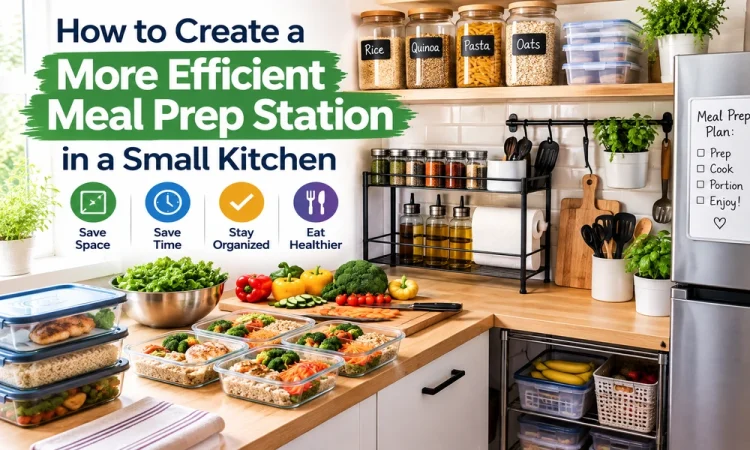

Cooking in a compact kitchen can sometimes feel like solving a puzzle. You chop vegetables on one corner of the counter, move a cutting board to make room for a bowl, then realize the knife you need is tucked away in a drawer across the room. A thoughtful meal prep station can make this everyday routine much easier.
The goal is not to completely remodel your kitchen or buy dozens of organizers. Instead, focus on arranging the items you already use so that preparing meals requires fewer unnecessary movements. Good small kitchen organization can turn even a limited cooking area into a comfortable, practical workspace.
By improving your kitchen workflow, creating extra counter space, and using flexible storage where necessary, you can spend less time searching for tools and more time actually cooking.
Start by Understanding Your Current Kitchen Workflow
Before reorganizing cabinets or purchasing storage products, watch how you normally prepare a meal.
Think about a typical dinner. You may take vegetables from the refrigerator, wash them, place them on a cutting board, chop them, season them, and eventually move them toward the stove.
Each of those steps creates a natural movement pattern.
An efficient kitchen workflow keeps related activities close together so you do not constantly cross the kitchen. In a small space, this is particularly important because countertops and walkways can become crowded quickly.
Try dividing your kitchen into simple zones:
- Food storage zone
- Washing zone
- Chopping and preparation zone
- Cooking zone
- Serving zone
- Cleaning zone
These zones do not need to be large. In some kitchens, two zones may share the same counter. What matters is arranging equipment according to how you actually cook.
Choose the Best Location for Your Meal Prep Station
Your main meal prep station should ideally sit between the sink, refrigerator, and cooking area.
You do not need a huge countertop. Even a clear section measuring a few feet wide can work well when properly organized.
Your preparation area should have easy access to essentials such as:
- Cutting boards
- Chef’s knife
- Mixing bowls
- Measuring tools
- Frequently used seasonings
- Vegetable peeler
- Kitchen towels
- Food storage containers
Avoid keeping unrelated appliances in this area.
For example, if you only use a waffle maker once every few weeks, it probably does not deserve permanent countertop space. Moving occasionally used equipment into cabinets can immediately create extra counter space without changing the kitchen itself.
Clear the Counter Before Adding More Storage
One common mistake in small kitchen organization is adding organizers before removing unnecessary items.
A countertop filled with spice racks, appliances, containers, baskets, and utensil holders may technically be organized, but it can still feel cramped.
Start by removing everything from your main preparation surface.
Then ask three questions about each item:
- Do I use this almost every day?
- Do I need it while preparing food?
- Does keeping it here make cooking noticeably easier?
If the answer is no, consider storing it somewhere else.
Coffee equipment, decorative containers, paper towels, appliances, and snack baskets can often be relocated to another part of the kitchen.
Sometimes the most effective kitchen storage ideas involve storing less rather than adding more.
Use Vertical Space for Small Kitchen Organization
When horizontal surfaces are limited, look upward.
Walls, cabinet doors, and the sides of cabinets can provide surprisingly useful storage.
Add Wall-Mounted Storage
A rail with hooks can hold frequently used tools such as:
- Ladles
- Measuring cups
- Kitchen scissors
- Small strainers
- Oven mitts
A magnetic knife strip can also free up drawer and counter space while keeping knives close to your preparation area.
Use Cabinet Interiors
The inside of cabinet doors is often overlooked.
Small racks can hold measuring spoons, pot lids, food wraps, or cleaning supplies. Shelf risers can also turn tall cabinet shelves into multiple storage levels.
These simple kitchen storage ideas help keep preparation surfaces clear without forcing you to move essential tools far from the cooking area.
Create Extra Counter Space With Flexible Furniture
Some kitchens simply do not have enough built-in work surface.
In that situation, mobile furniture can be especially useful.
A rolling kitchen cart can serve several purposes depending on your routine. During meal preparation, the top becomes another cutting or mixing surface. After cooking, it can hold serving dishes, cookware, pantry ingredients, or small appliances.
For kitchens where permanent cabinetry is not practical, a kitchen island cart can provide additional preparation space while still allowing the layout to remain flexible.
The ability to reposition your workspace can be particularly useful in apartments, rental homes, and narrow kitchens.
What to Look for in a Rolling Kitchen Cart
Consider features such as:
- Locking wheels for stability
- A durable work surface
- Shelves or drawers
- Hooks for towels or utensils
- Enough clearance to move comfortably
Measure your available floor space carefully before adding anything.
A rolling kitchen cart should improve movement rather than create another obstacle.
Keep Frequently Used Ingredients Within Reach
Preparation becomes faster when common ingredients are located close to where you actually use them.
For example, salt, pepper, cooking oil, garlic powder, and your most-used spices can stay near the cooking and preparation zone.
Less frequently used ingredients can remain inside cabinets.
This simple approach supports a smoother kitchen workflow because it reduces repeated trips between cabinets and counters.
You can apply the same principle to refrigerated ingredients.
If you regularly prepare sandwiches, salads, or breakfast meals, group related foods together inside the refrigerator. When you begin cooking, you can remove several ingredients at once instead of opening the refrigerator five different times.
Organize Tools According to Frequency of Use
Not every cooking tool deserves the same level of accessibility.
Imagine your storage in three levels.
Level One: Everyday Tools
Keep these closest to your meal prep station.
Examples include:
- Knives
- Cutting boards
- Mixing bowls
- Measuring spoons
- Wooden spoons
- Frequently used pans
Level Two: Weekly Tools
These can stay in normal cabinets or drawers.
Examples might include a blender, baking trays, colanders, or specialty utensils.
Level Three: Occasional Equipment
Holiday platters, large baking pans, specialty appliances, and rarely used cookware can be stored in harder-to-reach cabinets.
This method makes small kitchen organization easier because valuable storage space is reserved for equipment you genuinely use.
Use Containers to Reduce Visual Clutter
Food packages often create more clutter than the food itself.
Half-empty bags of rice, flour, pasta, cereal, and snacks can quickly fill shelves.
Stackable containers can help organize pantry ingredients more efficiently. Clear containers are particularly useful because you can see how much remains without opening them.
However, avoid transferring everything into containers simply because it looks attractive.
Prioritize ingredients that:
- Come in awkward packaging
- Spill easily
- Need airtight storage
- Are purchased frequently
- Take up unnecessary shelf space
Practical kitchen storage ideas should solve real problems rather than create extra maintenance.
Prepare Ingredients in Batches
An efficient kitchen setup is not only about furniture and storage. Your cooking habits matter too.
If several meals require similar ingredients, prepare them together.
For example, if you need chopped onions for soup tonight and pasta tomorrow, chopping both portions at the same time saves effort.
The same approach works with:
- Washed vegetables
- Cooked grains
- Chopped herbs
- Roasted vegetables
- Sauces
- Marinades
Batch preparation makes your meal prep station more productive because you complete several future cooking tasks during one session.
It also reduces the number of cutting boards, knives, bowls, and surfaces you need to wash throughout the week.
Clean While You Cook
Nothing reduces useful workspace faster than dirty dishes.
When countertop space is already limited, leaving bowls, wrappers, cutting boards, and utensils around can make meal preparation frustrating.
Keep a small waste bowl beside your cutting board for vegetable scraps and packaging. Instead of repeatedly walking to the trash can, place waste in the bowl and empty it when preparation is finished.
You can also rinse tools while food is simmering or baking.
Keeping the area reasonably clean throughout the cooking process preserves extra counter space and makes the final cleanup much easier.
Give Every Item a Permanent Home
One of the simplest ways to maintain an efficient kitchen is to decide exactly where everything belongs.
When tools constantly move between drawers and cabinets, even a well-organized kitchen eventually becomes confusing.
Assign permanent locations based on activity.
For example:
- Knives near the chopping area
- Pots near the stove
- Food containers near the refrigerator
- Baking tools near the oven
- Cleaning products near the sink
Consistent storage improves your kitchen workflow because you no longer need to think about where items are located.
This habit also makes it easier for other household members to return things to the correct place.
Review Your Setup After a Few Weeks
Your first arrangement does not have to be perfect.
After using the kitchen for a few weeks, pay attention to recurring frustrations.
Perhaps the cutting boards are difficult to reach. Maybe your spice storage is too far from the stove. You might discover that your rolling kitchen cart works better beside the refrigerator than beside the counter.
Small adjustments often produce better results than a major redesign.
Effective small kitchen organization should reflect your real habits rather than an idealized kitchen layout from a photograph.
Frequently Asked Questions
What should be included in a meal prep station?
A practical meal prep station should include the tools you use most frequently, such as knives, cutting boards, bowls, measuring tools, towels, and commonly used seasonings. Keep the surface as clear as possible.
How can I create extra counter space in a very small kitchen?
Start by removing rarely used appliances from your countertop. You can also use cutting boards that fit over sinks, wall-mounted storage, shelf organizers, or movable work surfaces to create extra counter space.
Is a rolling kitchen cart useful in a small apartment?
Yes. A rolling kitchen cart can provide preparation space, storage, and even a temporary serving area. Choose a model that fits comfortably without restricting your normal walking path.
How do I organize a small kitchen without spending much money?
Start by decluttering before buying new organizers. Rearranging cabinets, grouping similar items, using existing containers, adding hooks, and changing where frequently used tools are stored can make a significant difference.
How often should I reorganize my kitchen?
There is no strict schedule. Review your setup whenever cooking begins to feel unnecessarily complicated. Small changes every few months can keep your kitchen practical as your cooking habits change.
Conclusion
Creating an efficient kitchen does not require a large room or an expensive renovation. The biggest improvements usually come from understanding how you cook and arranging the space around those habits.
Start with a practical meal prep station, remove unnecessary countertop clutter, store frequently used tools within easy reach, and use vertical or mobile storage when built-in space is limited. Thoughtful kitchen storage ideas can make even a compact kitchen feel more manageable.
Most importantly, design your kitchen for real everyday cooking rather than appearance alone. When ingredients, tools, and surfaces are positioned logically, meal preparation becomes faster, cleanup becomes easier, and your entire kitchen workflow feels more natural. A few carefully planned adjustments can make a small kitchen far more enjoyable to use.