


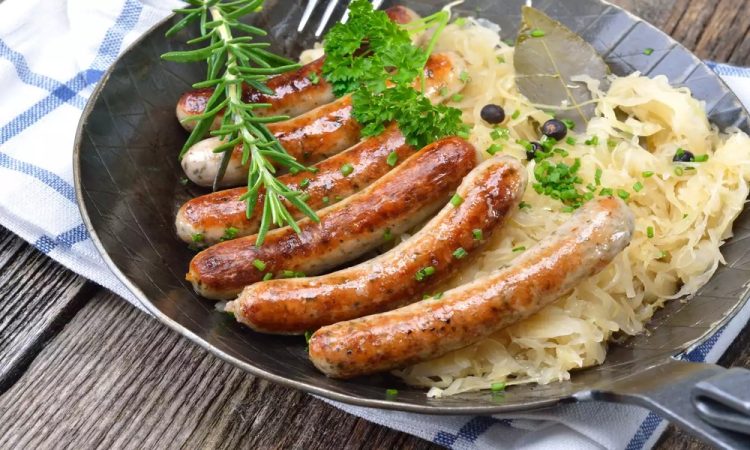

Cross from Bavaria into Thuringia, and the sausage on the plate looks nothing like what was served two hours back. Different meat. Different spicing. Different cooking method entirely. Same country, completely different convictions about what a sausage should be and how it should arrive at the table.
None of this is preserved for visitors. Locals eat this way because this is how the region eats. german wurst culture never unified into one national standard because nobody wanted it to. Each place decided what worked, kept doing it, and developed strong opinions about everyone else’s version.
1. Bavaria
Weisswurst
Veal and pork back bacon. Parsley, lemon, cardamom. Poached, never grilled. Served floating in warm water because the texture changes if it cools, and Bavarians find that unacceptable.
Noon is the cutoff. Order after twelve, and most traditional establishments say no without much explanation. Sweet mustard alongside, soft pretzel nearby. An ongoing regional argument exists about whether the casing gets peeled or the filling gets sucked directly from one end. Both sides of that argument are equally certain they are correct.
2. Thuringia
Thuringian Rostbratwurst
Coarse-ground pork. Caraway, marjoram, garlic. Long and thin. Grilled over beechwood charcoal specifically because Thuringians consider gas a different product, not a substitution anyone should accept quietly.
Protected Geographical Indication keeps authentic production inside the region. Eaten standing at a market stall, tucked into a bread roll, mustard applied to the sausage rather than the bread. Sitting down to eat is possible. It rarely happens that way.
3. Nuremberg
Nuremberg Rostbratwurst
Small. Marjoram-heavy. Three inside a bread roll for a snack, eight on a plate for a proper meal. City records trace them back to the fourteenth century. Locals bring this up regularly.
Beechwood again, fast cooking because the size demands it. Freshly grated horseradish is served alongside when it is served as a full meal. Sharp enough to clear the sinuses properly. Visitors who skip it the first time rarely skip it twice.
4. Rhineland
Blutwurst
Blood, bacon, onion, sometimes groats or rye bread worked through the filling. Served cold on dark bread or heated in a pan until the outside crisps. Flavour runs mineral and deep in a way that pork-only varieties never reach.
Himmel und Erde on the side. Mashed potato and apple cooked together, sweet and soft against something dense and iron-rich. Makes no obvious sense until it is sitting in front of you, and suddenly makes complete sense.
5. Franconia
Smoked regional varieties
Cold-smoked over local wood. Sliced thin. Eaten on bread with sharp mustard that does not try to be polite about its job. Bamberg market stalls have been serving it this way longer than most visitors think to ask about.
Fresh sausage cooked well is one thing. A sausage that spent days in cold smoke develops something underneath the surface that heat alone never produces. Pickled vegetables alongside, not optional, not decorative. They pull the smokiness into focus rather than letting it sit heavy throughout the whole meal.
Every region arrived at its version through years of cooking for its own people. None of them consulted each other. Most of them still would not.